- You have no items in your shopping cart
- Continue Shopping

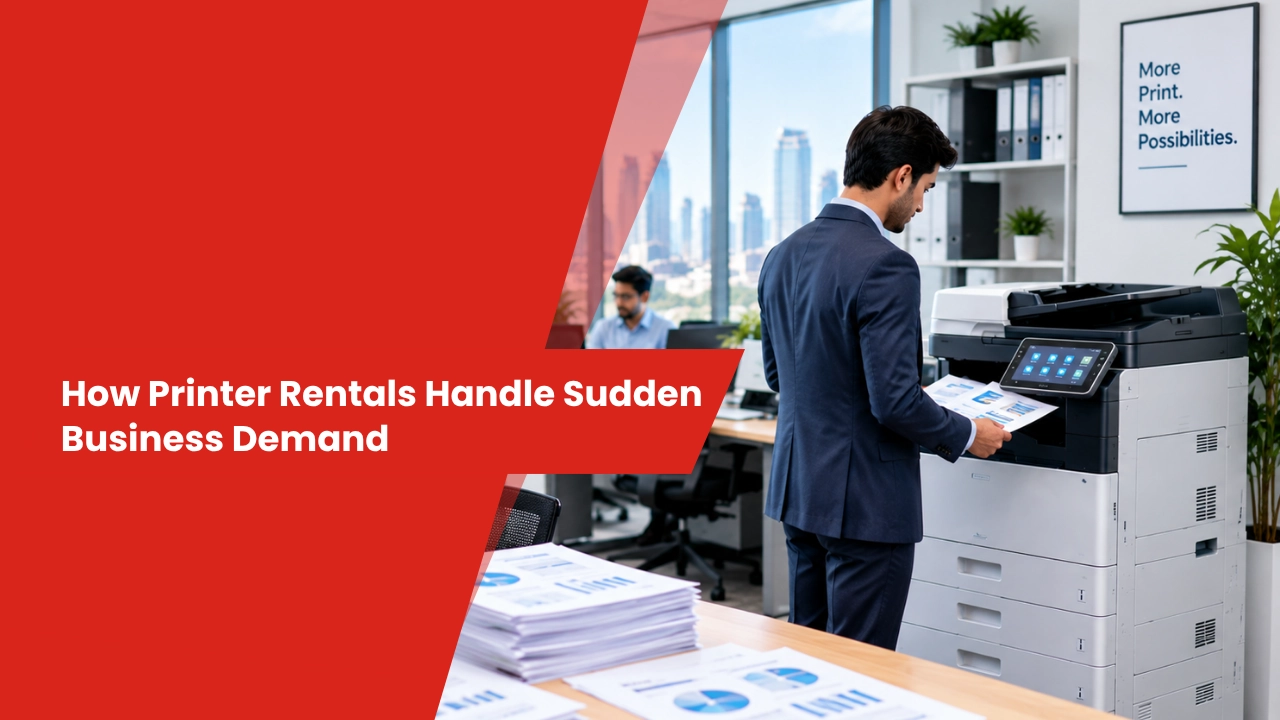
Businesses do not always have predictable printing requirements. A company may manage its normal workload comfortably with its existing equipment, but a new project, seasonal increase, office expansion, exhibition, training program, or major customer requirement can suddenly create a much larger demand for printed documents.
When this happens, insufficient printing capacity can create delays across the workplace. Employees may spend more time waiting for documents, existing machines may experience heavier workloads, and important deadlines can become more difficult to meet. Purchasing additional equipment may seem like the obvious solution, but it is not always practical when the increase in demand is temporary.
A flexible equipment arrangement allows organizations to increase their printing capacity according to their actual requirements. This approach can help businesses manage unexpected workloads while avoiding the cost and responsibility associated with purchasing additional machines.
What Causes Sudden Increases in Printing Demand?
Printing requirements can increase for many different reasons. Some increases are planned, while others happen unexpectedly.
Seasonal business activity is one common reason. Certain companies experience periods when administrative work, customer documentation, invoices, forms, or reports increase significantly. During these periods, the normal office equipment may not be sufficient.
New contracts and business projects can also create additional demand. A company may suddenly need to produce large quantities of proposals, reports, contracts, presentations, manuals, or other documents.
Corporate events and exhibitions can have similar requirements. Businesses may need printed brochures, registration forms, schedules, promotional materials, visitor information, and internal documentation within a short timeframe.
Office expansion is another factor. When a company opens a new branch or increases its workforce, its existing printing infrastructure may no longer match the increased workload.
Understanding the reason behind the increase is important because it helps businesses determine what type of additional equipment they actually need.
Why Flexible Printing Capacity Matters
When printing demand rises unexpectedly, businesses need to respond quickly. Waiting several weeks to purchase and install new equipment may not be suitable when a project has an immediate deadline.
A rental arrangement can provide access to additional equipment without requiring the company to permanently expand its printer fleet. This gives organizations greater flexibility when dealing with short-term or uncertain requirements.
For example, a business handling a six-month project may require significantly more printing capacity during that period. Once the project is completed, its printing requirements may return to normal.
Instead of purchasing equipment that could remain underused afterward, the company can use additional machines for the period in which they are genuinely required.
Managing High-Volume Printing More Efficiently
High-volume printing can place considerable pressure on existing office equipment. A machine that is suitable for everyday administrative tasks may not be designed for continuous heavy workloads.
When thousands of pages need to be produced within a limited timeframe, businesses should consider factors such as printing speed, monthly duty cycle, paper capacity, output quality, and reliability.
Additional equipment allows organizations to divide the workload. One machine can handle routine documents while another processes large project-related jobs.
This can reduce printing queues and help employees complete their work without constantly waiting for a single machine to become available.
It can also reduce the risk of an entire workflow being interrupted if one device requires servicing.
Office Rental Printers in UAE for Changing Workloads
Office rental Printers in UAE can provide businesses with a practical option when their printing requirements change temporarily or unexpectedly.
Rather than permanently purchasing additional equipment, organizations can select machines according to their current workload. This can be useful for companies handling seasonal operations, temporary projects, events, office relocations, or periods of rapid growth.
The right equipment should be selected according to practical requirements rather than simply focusing on the rental price. Businesses should consider print volume, speed, colour requirements, document sizes, multifunction capabilities, and expected usage.
For example, an office that primarily produces contracts and reports may require a different device from a company that regularly prints colour marketing materials.
Matching equipment to the actual workload can help businesses achieve better performance and avoid unnecessary capacity.
Supporting Seasonal Business Operations
Seasonal workloads can create significant changes in office printing requirements. A business may have relatively stable document production for most of the year and then experience a sharp increase during a particular season.
Professional services companies may require additional reports and documentation. Educational organizations may need more forms and administrative documents during admissions or examinations. Retail businesses may increase their printed marketing materials during promotional periods.
Buying equipment specifically for these short periods can result in underused assets once demand decreases.
A flexible arrangement gives businesses an opportunity to increase capacity during busy periods and return to their normal equipment setup afterward.
This approach can make equipment planning more adaptable and help organizations avoid investing in machines they may not need permanently.
Handling Temporary Projects and Events
Business events often require printing resources that are not part of normal office operations.
Conferences, exhibitions, product launches, training programs, seminars, promotional campaigns, and temporary business locations may all require additional documentation.
Event organizers may need to produce registration forms, schedules, certificates, handouts, information sheets, invoices, and promotional materials.
A temporary printing setup can help meet these requirements without requiring the business to purchase equipment specifically for one event.
The same principle can apply to temporary offices. Companies involved in construction projects, relocation activities, branch launches, or short-term contracts may require printing facilities for a limited period.
Having access to suitable equipment can help employees maintain normal document workflows even when the business environment is temporary.
Reducing Pressure on Existing Equipment
When a business experiences a sudden workload increase, it is tempting to use existing machines continuously until the demand decreases. However, excessive usage can increase wear and create greater pressure on equipment.
A breakdown during an important project can cause delays and potentially affect customer service or internal operations.
Adding another machine provides an opportunity to distribute workloads more effectively. Different departments or teams can use separate equipment, while high-volume jobs can be directed toward machines designed for heavier usage.
This approach can contribute to smoother office operations and reduce dependency on a single device.
Managing Costs During Short-Term Demand
Purchasing additional equipment involves more than the purchase price. Businesses may also need to consider installation, maintenance, toner, replacement components, servicing, repairs, and future upgrades.
When additional printing capacity is needed only temporarily, these costs may not provide sufficient long-term value.
A printer rental UAE solution can allow businesses to access professional equipment without purchasing it outright. Depending on the agreement, services such as maintenance and technical assistance may also be available.
However, companies should carefully review the complete rental arrangement before making a decision. The rental period, included services, consumables, maintenance responsibilities, equipment replacement, and additional charges should be clearly understood.
Looking at the total cost rather than the monthly rental amount alone helps businesses make a more informed decision.
Choosing the Right Equipment for Business Demand
The correct machine depends on the nature of the workload.
Businesses should begin by estimating their expected printing volume. They should then identify whether they mainly require black-and-white or colour output and whether A4 or A3 documents are necessary.
Print speed is important for deadline-driven workloads. If employees regularly need hundreds of documents within a short period, a faster device may be more appropriate.
Multifunction capabilities can also provide additional value. A device that combines printing, scanning, and copying can help reduce the need for multiple separate machines.
Connectivity should also be considered. Modern offices may require wireless, network, cloud, or mobile printing depending on their existing systems.
A suitable equipment choice should balance performance, reliability, functionality, and cost.
How Growing Businesses Can Adapt Their Printing Setup
Business growth can change printing requirements just as quickly as temporary projects can.
Hiring new employees, adding departments, opening branches, acquiring customers, and taking on larger contracts can all increase document production.
A business may not know exactly how its printing needs will develop over the next year. Maintaining a flexible equipment strategy can therefore be useful.
Instead of immediately investing in several permanent machines, companies can evaluate their actual usage and gradually adjust their printing capacity.
This can be particularly valuable for startups and small and medium-sized businesses that need to manage resources carefully while expanding their operations.
What to Consider Before Renting Additional Equipment
Businesses should evaluate several factors before selecting additional printing equipment.
Expected Print Volume
Estimate average and peak monthly printing requirements. This helps determine whether standard office equipment or high-volume machinery is more appropriate.
Required Print Speed
Consider how quickly documents need to be produced. Faster equipment can be valuable when employees work with strict deadlines.
Document Type
Determine whether the business primarily prints reports, contracts, forms, brochures, presentations, or other materials.
Colour Requirements
Identify whether monochrome printing is sufficient or whether regular colour output is necessary.
Additional Functions
Consider whether scanning, copying, finishing, or other functions are required.
Rental Duration
The equipment period should match the actual business requirement as closely as possible.
Maintenance and Support
Businesses should understand how servicing, technical assistance, repairs, and equipment replacement are handled.
Taking these factors into account can help organizations choose equipment that supports their operations rather than simply adding another machine to the office.
Why Businesses Need a Reliable Printing Partner
Equipment quality is important, but service support can be equally valuable. A business depends on its printing infrastructure to complete everyday administrative and operational tasks.
A reliable provider should be able to understand the customer’s workload and recommend equipment accordingly. Clear rental terms, responsive technical assistance, appropriate equipment, and dependable maintenance can all contribute to a better experience.
Businesses should therefore evaluate the complete service package rather than choosing a provider based only on price.
A good printing partner should help organizations maintain productivity while adapting their equipment to changing requirements.
Frequently Asked Questions
When is additional printing capacity necessary?
Additional capacity may be useful when a business experiences seasonal demand, starts a major project, organizes an event, expands an office, opens a new branch, or receives an unusually large workload.
Is renting suitable for short-term projects?
Yes. Temporary equipment can be useful when additional printing capacity is required for a specific project, event, training program, exhibition, or limited business period.
How can businesses avoid printer-related delays?
Businesses can reduce delays by estimating their printing requirements, selecting appropriate equipment, distributing workloads, maintaining devices properly, and having access to technical support.
Should a business choose a multifunction printer?
A multifunction device can be useful when employees regularly need printing, scanning, and copying. The best choice depends on the organization’s actual workflow.
What should businesses ask a rental provider?
Businesses should ask about equipment specifications, rental duration, maintenance, technical support, consumables, replacement policies, service response, and the complete cost of the agreement.
Making Your Business Printing More Flexible
Sudden increases in printing demand can put pressure on office equipment and employees. Seasonal workloads, major projects, events, office expansion, and business growth can all increase printing requirements.
Flexible printer solutions allow businesses to increase their printing capacity without making a permanent investment. Companies can select equipment based on print volume, speed, document type, features, and rental duration.
The right equipment, clear rental terms, maintenance support, and reliable service can help businesses manage busy periods efficiently.
A flexible printing setup allows businesses to handle current demands while adapting to future changes.